Sector Clusters
Six clusters — delivery phased across three waves.
ASBEES covers the full built environment, organised into six technical clusters. The vision is broad; delivery is phased in three waves — Wave 1 active at launch (Years 1–2), Wave 2 (Years 2–4) and Wave 3 (Years 4–5+).
The six clusters
Select a cluster to open it, or jump straight to a sector.

Cluster 1 — Building & Construction
The physical building stock and the act of designing and building it.
- Residential buildings (single-family and multi-unit) W1
- Commercial, retail and office buildings W1
- Public and institutional buildings (education, health, government) W1
- General contracting and construction management W1
- Architecture and building design W1
- Structural engineering of buildings W1
- Industrial and logistics buildings W2
- Renovation, retrofit and adaptive reuse W2
- Construction materials and products W2
- Cost management and quantity surveying (construction economics) W2
- Heritage and conservation W3
- Modular, prefabricated and off-site construction W3


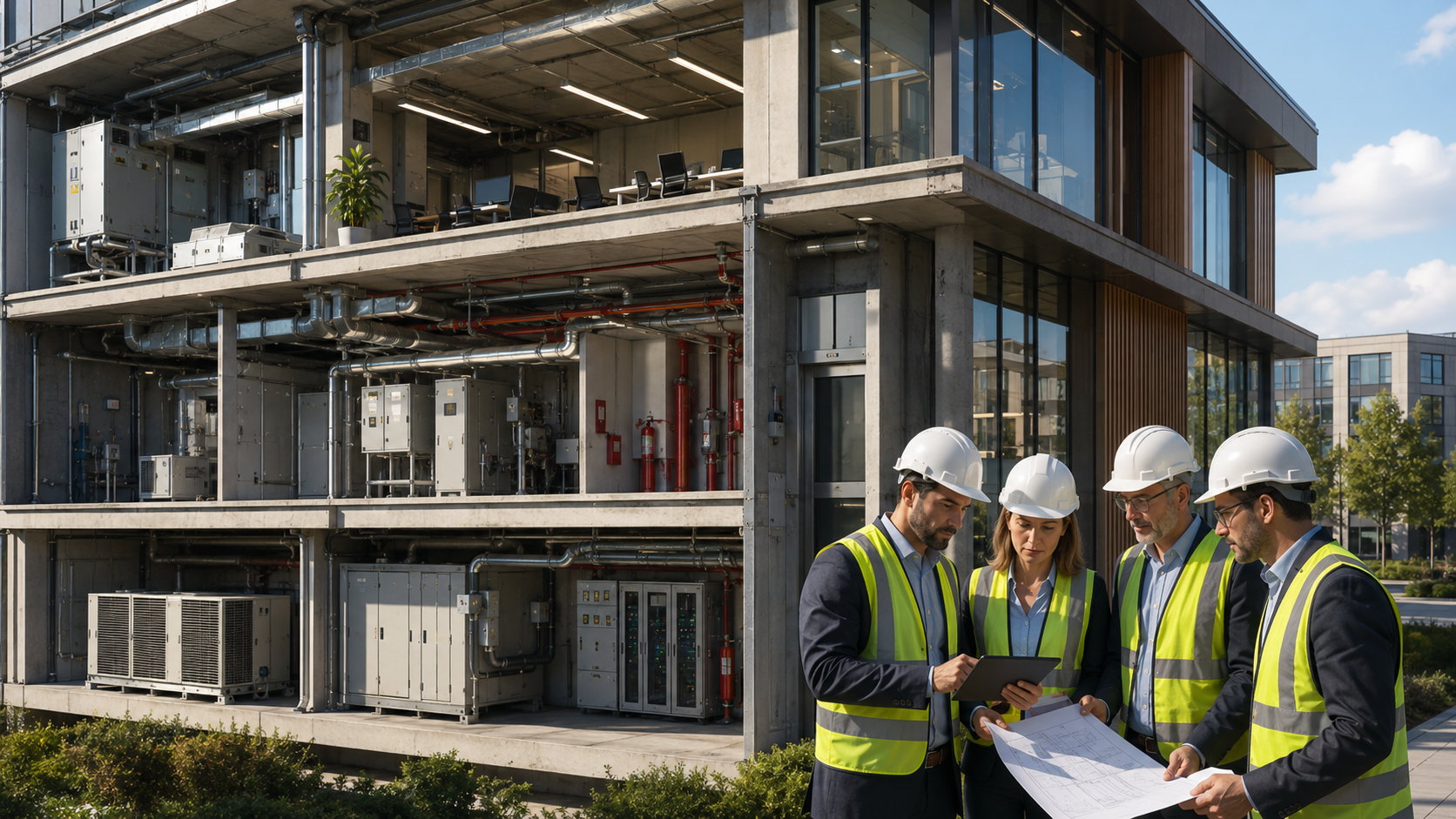
Cluster 2 — Engineering & Building Systems
The technical systems engineered into and serving buildings, plus their operation and maintenance.
- HVAC-R (heating, ventilation, air conditioning and refrigeration) W1
- Plumbing and sanitary systems W1
- Electrical installations and low-voltage power distribution W1
- Fire protection systems (detection and suppression) W1
- MEP coordination and integrated building services engineering W1
- Lighting design and systems W2
- Vertical transportation (lifts, escalators) W2
- Building management systems and automation (BMS) W2
- Security systems (CCTV, alarms, access control) W2
- Building physics and envelope engineering W2
- Commissioning and building performance verification W2
- Facility management and technical maintenance W2
- Industrial installations and maintenance W2
- Acoustics and vibration W3


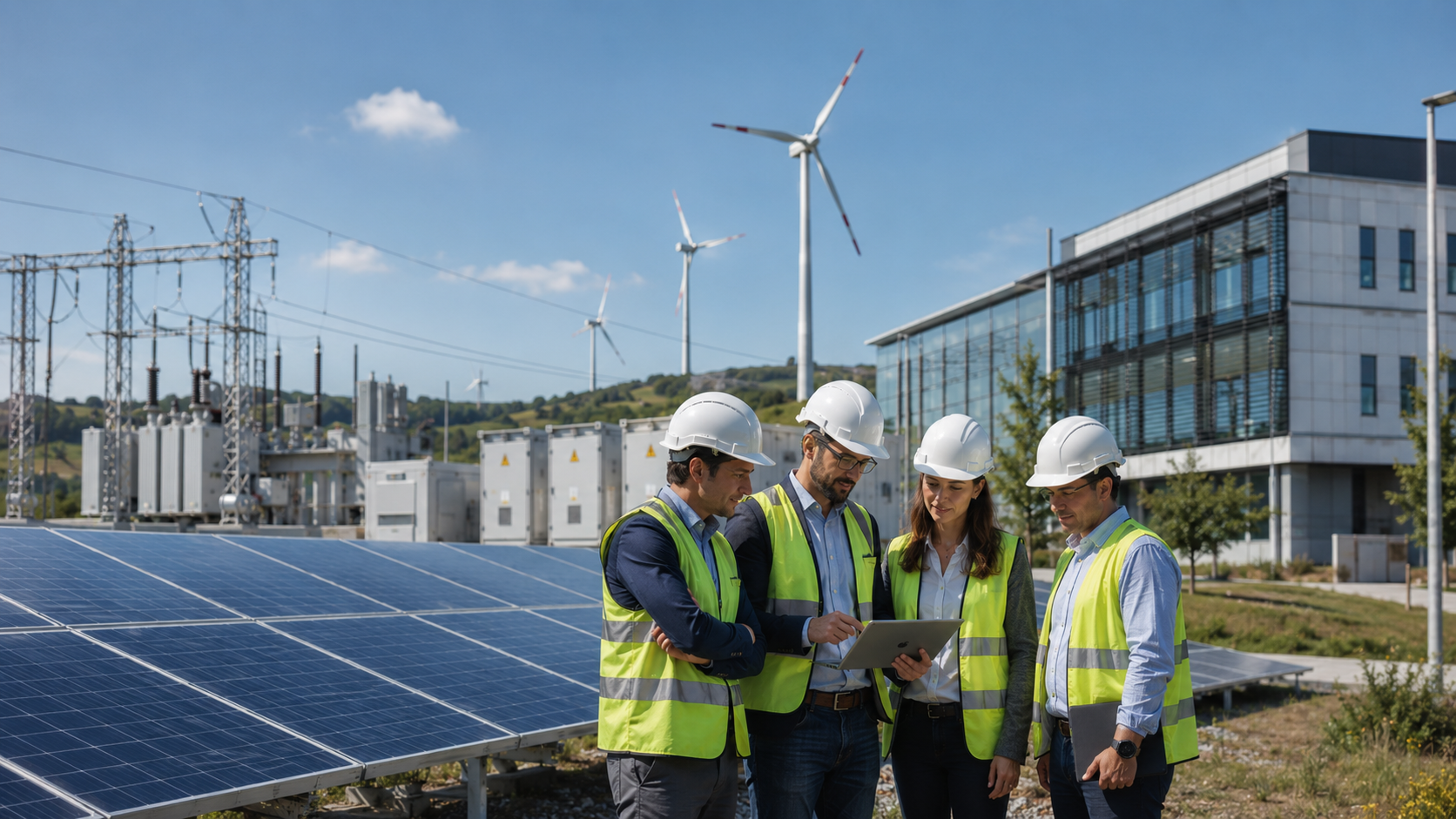
Cluster 3 — Energy
Energy generation, supply, efficiency and management across buildings and systems.
- Renewable energy (solar PV, wind, hydro, biomass, geothermal) W1
- Thermal and fossil-fuel energy (coal/lignite, oil, gas) W1
- Energy efficiency and building energy performance W1
- Energy audits and performance certification (EPC) W1
- Energy policy, markets and regulation (Energy Community context) W1
- Power transmission, distribution and grid systems W2
- District heating and cooling W2
- Energy management and monitoring (ISO 50001) W2
- ESCO — Energy Service Companies W2
- Energy storage W3
- E-mobility and EV charging (energy dimension) W3
- Emerging fuels (green hydrogen, alternative fuels) W3
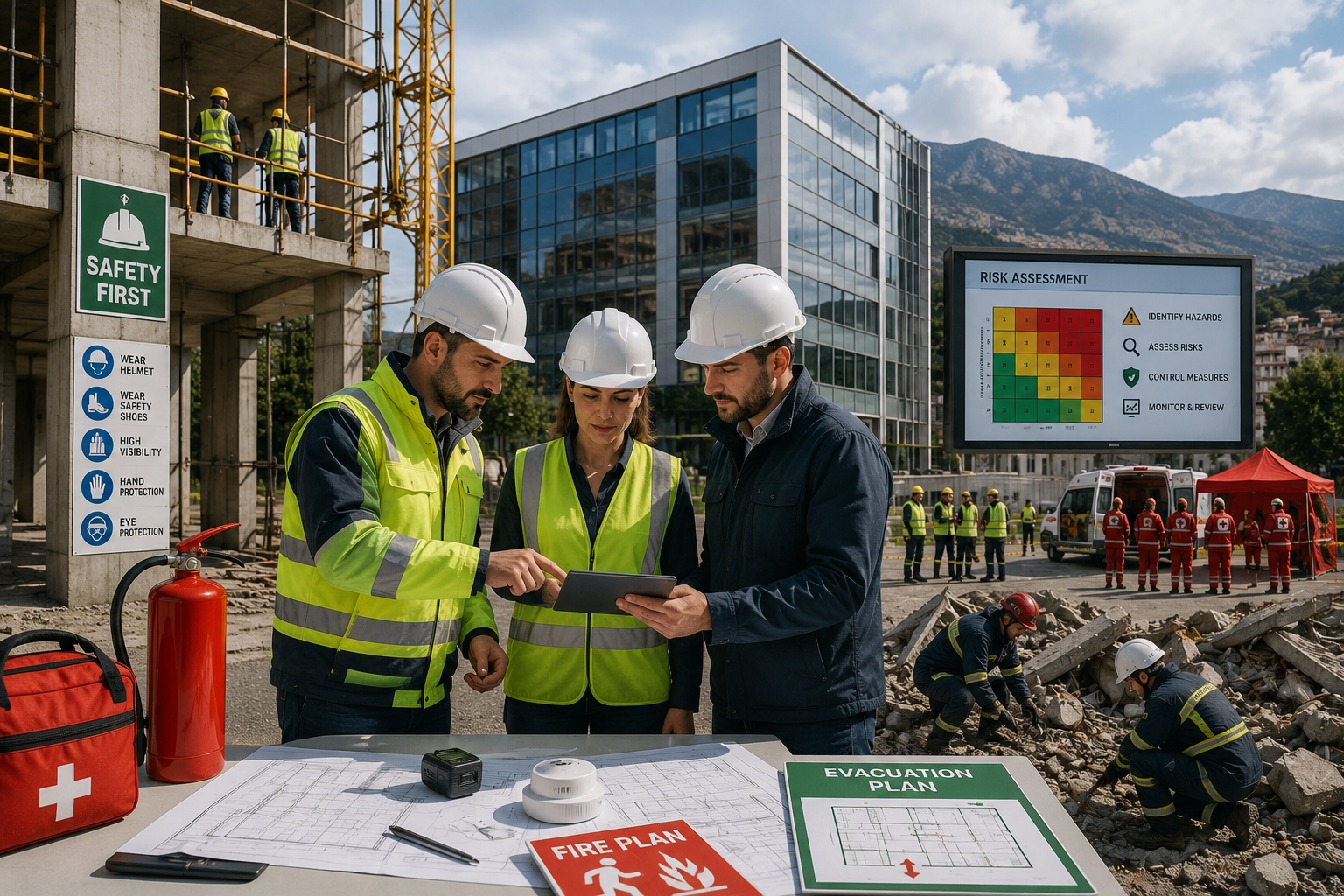
Cluster 4 — Safety & Resilience
Protection of people, assets and continuity against hazards and shocks — the discipline and compliance layer, not the hardware.
- Occupational health and safety (OHS), including construction site safety W1
- Fire safety strategy and life-safety compliance (egress, fire-risk assessment, code compliance) W1
- Quality, inspection and certification W1
- Physical security and access risk management W2
- Structural safety and seismic resilience W2
- Disaster risk reduction and emergency management W2
- Indoor environmental quality and occupant health W2
- Risk management and business continuity W2
- Climate adaptation and resilience W3
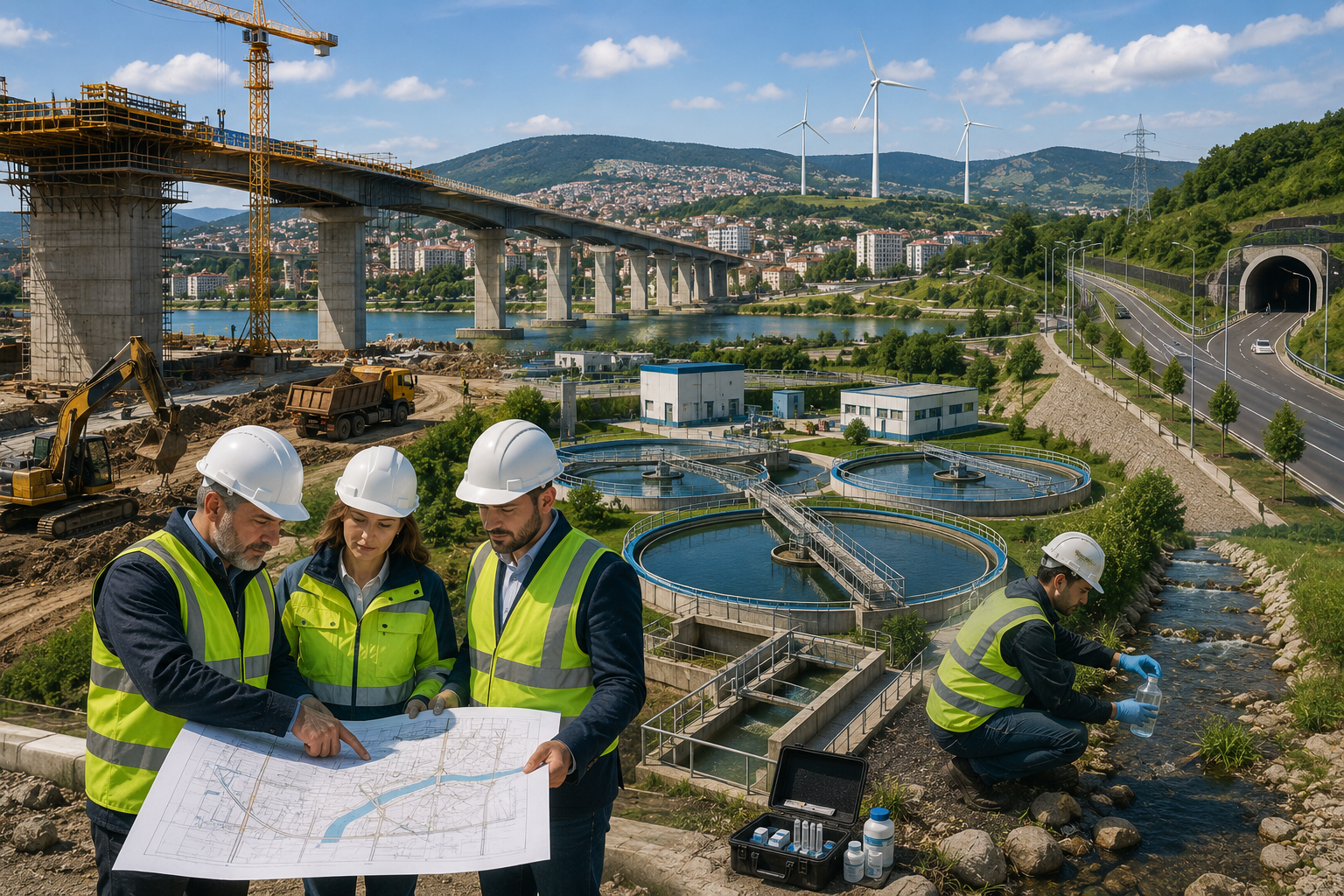
Cluster 5 — Infrastructure & Environment
Civil and environmental works at network and territorial scale, beyond the single building.
- Transport infrastructure (roads, bridges, rail) W1
- Water supply, sanitation and wastewater W1
- Environmental impact assessment and permitting W1
- Public works and civil infrastructure delivery W1
- Water resources and hydraulic engineering W2
- Geotechnical engineering and foundations W2
- Solid waste management and circular economy W2
- Environmental engineering and protection W2
- Landscape and green/blue infrastructure W3
- Telecommunications and utility infrastructure (physical networks) W3
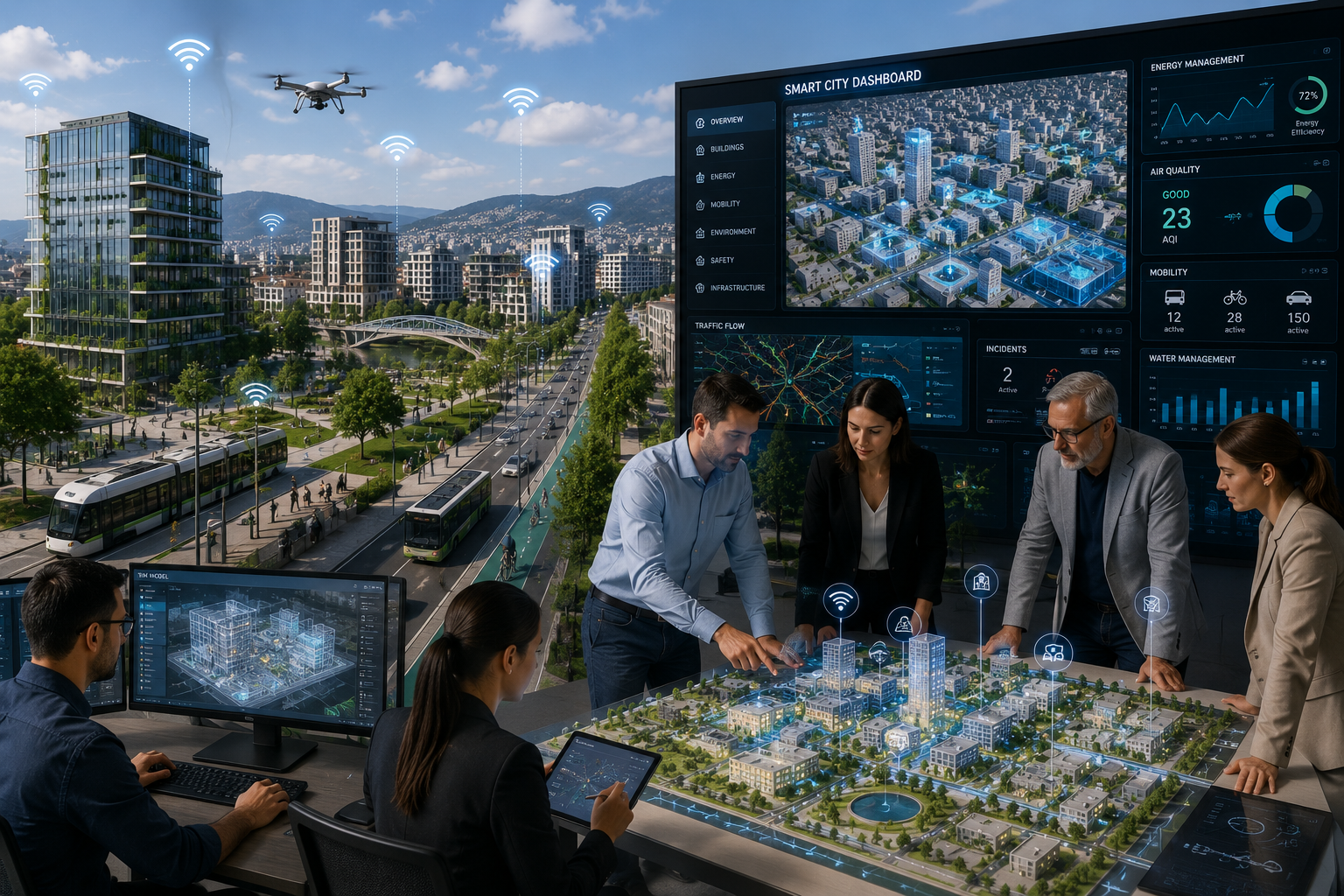
Cluster 6 — Smart & Urban
The digital, spatial and urban-governance layer over the built environment.
- Urban planning and spatial development W1
- Digital construction and BIM (Building Information Modelling) W1
- Smart cities and urban digitalisation W2
- Smart buildings and IoT W2
- GIS and digital twins W2
- Intelligent transport and smart mobility systems W3
- Smart grids and smart metering (digital layer) W3
- Data, sensors and analytics for the built environment W3
- PropTech and ConTech W3
- Public space, placemaking and smart urban services W3